



Transformer Reliability for Petrochemical Facilities
End-to-End Transformer Care for High-Stakes, Continuous Operations
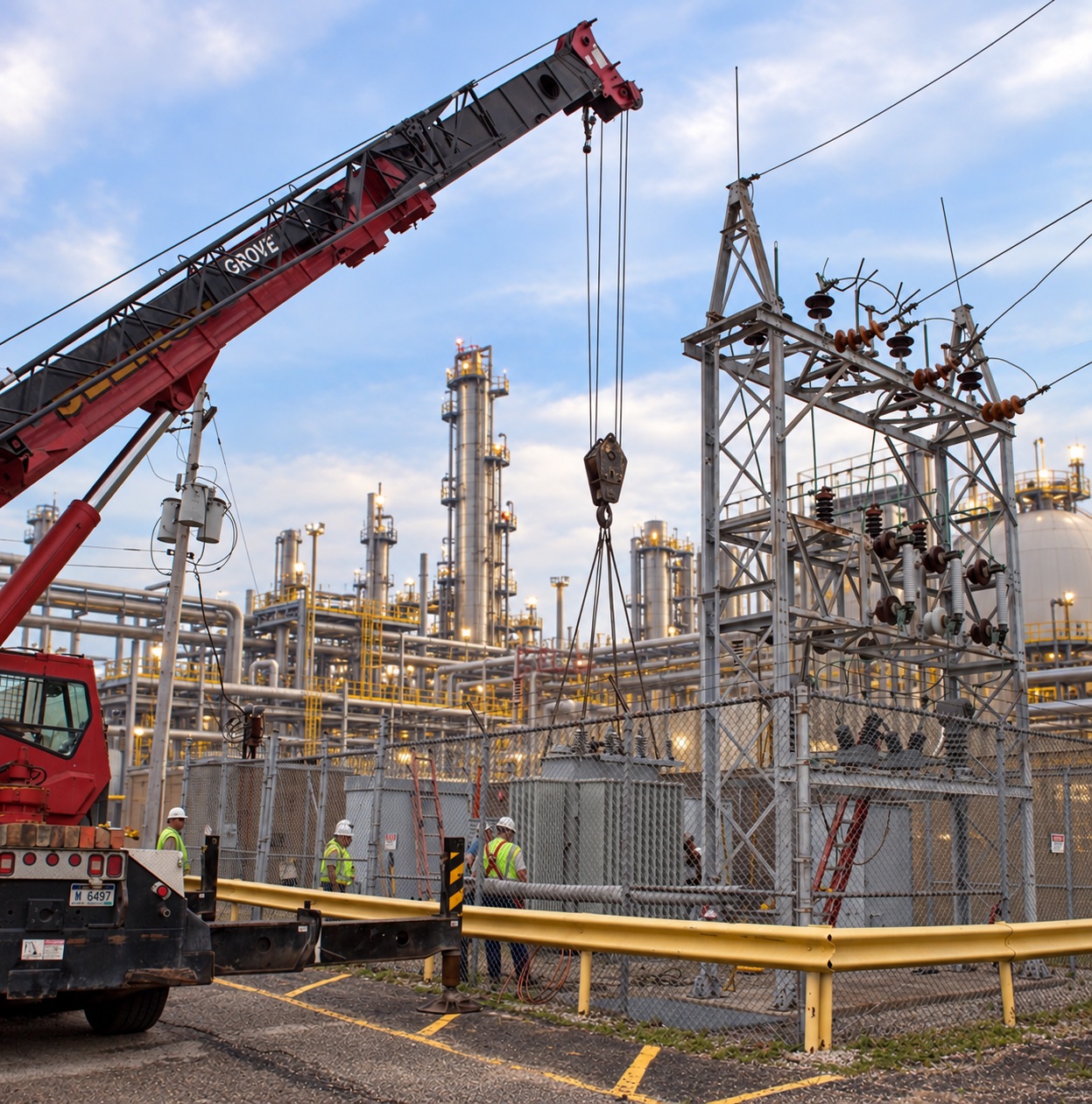
Why Transformer Reliability Matters in Petrochemical Operations
Power reliability and safety are inseparable for petrochemical facilities. Your transformers run in demanding, often hazardous environments, feeding continuous processes where an unplanned shutdown carries costs (and risks!) few other industries face. A transformer issue here isn't only an uptime concern—it's tied directly to process safety and regulatory standing. Proactive, data-driven transformer maintenance is part of running safely and reliably.
Several realities shape the maintenance conversation:
- Unplanned downtime is extraordinarily costly. In continuous-process operations, an unexpected outage can cascade across the facility, with financial and safety consequences that dwarf the cost of proactive maintenance.
- Harsh, demanding environments accelerate wear. Heat, contaminants, and heavy loading stress transformer insulation and can accelerate aging—making early detection essential.
- You can't rush a replacement. Transformer lead times now stretch well past two years. For assets central to a continuous process, extending the life of what you already own is a business-critical strategy.
How SDMyers Helps Petrochemical Facilities

Early Fault Detection

Asset Life Extension

Clarity from Complexity

On-Site Safety
Our Approach for Transformer Reliability
01
Assess
We review your transformer fleet, existing data, and equipment criticality.
02
Consult
Your team receives a prioritized transformer reliability plan built around gathering the right data at the right intervals.
03
Validate
Our expert field technicians perform testing, diagnostics, and corrective actions on-site, and our diagnostics team reviews the results and delivers them clearly.
04
Sustain
SDMyers provides ongoing monitoring, testing, and field service as needed with real-time support through your Transformer Dashboard®.
Why Partner with SDMyers?

Proven track record.
60+ years of successful transformer life extension and maintenance expertise.

Like having experts on staff.
Our technicians and staff support your internal maintenance teams when they may feel stretched thin.

Millions of data points.
We have the world's largest transformer fluid analysis database with millions of real-world data points.

End-to-end capability.
From consulting to testing and diagnostics to corrective actions and ongoing reliability planning.

Trusted partnership.
We recommend what's in your best interest and treat you like a partner, not just another transaction.
Frequently Asked Questions
Best practice ties testing cadence and intervals to each transformer's type, loading, environment, and criticality. In demanding continuous-process settings, that often means more frequent monitoring for the most critical assets, alongside routine inspection, annual oil testing, and infrared thermography.
Yes. Our Field Inspection Technicians (FITs) are accustomed to working within strict safety protocols, site access rules, and operating constraints, coordinating around your process and requirements to minimize disruption.
Many facilities have strong internal maintenance programs for their mechanical or electrical needs, but lack deep transformer specialization. This is especially true as experienced staff retire. SDMyers can supplement your internal team with expert interpretation, prioritized recommendations, and the diagnostic depth that comes from the world's largest fluid analysis database.
Yes. With NFPA 70B now an enforceable standard, we help you build maintenance records that hold up to audits and satisfy compliance requirements. NFPA 70B now requires a documented electrical maintenance program (EMP), including annual infrared scanning. We help you build and document a compliant, defensible program.
Most operations aren't short on data. They're short on confident interpretation of the data. Our diagnostics team translates test results into clear, prioritized recommendations, backed by the world's largest transformer fluid analysis database. You'll know what the data means and what to do about it.
Yes. We help commercial and industrial operations with a fleet-wide approach to transformer maintenance. Our Electrical Reliability Advisors can help you maintain a consistent reliability standard across distributed facilities and multiple site locations, prioritizing attention where it matters most.
Schedule a transformer reliability consultation with one of our transformer experts. We'll review your critical assets, talk through your current data and priorities, and help you build a clear path forward. Reach out through the form on this page or call us to talk to a transformer expert directly.
Talk with a Transformer Expert
Get a free quote or consultation on a tailored plan for your operations—we’re here to help.
Call (330) 630-7000 or fill out the form to connect with an SDMyers transformer expert today.