


What Are the Key Barriers to Electrical System Reliability?
- Knowledge Center
- Articles
- Transformer Reliability
- What Are the Key Barriers to Electrical System Reliability?
This article covers organizational and operational barriers to developing electrical system reliability programs. Here we will address the seven most common challenges reliability practitioners face when attempting to extend best practices to electric power systems — and the practical strategies for overcoming them.
Reliability best practices are standard across most industrial and utility sectors. Predictive and preventive maintenance programs are well-established for servers, rotating equipment, furnaces, and virtually every other critical asset class. Yet electric power systems — the infrastructure that everything else depends on — are frequently excluded from these programs. In focus group research conducted among reliability practitioners, fully half of respondents reported having no electrical system reliability program at all, despite maintaining robust programs for every other asset in their operations.
The cost of that gap is not theoretical. Transformer failures have resulted in combined downtime and replacement costs ranging from $100,000 to $50 million for a single asset valued at $400,000. The financial exposure is not in the equipment itself — it is in everything that equipment powers. Closing this gap requires confronting a consistent set of organizational, cultural, and structural barriers that, in most cases, come down to one root cause: communication.
Why Electrical Systems Get Left Behind
Most organizations understand the economic logic of prevention over repair. The persistence of break/fix thinking in electric power systems is not a knowledge gap — it is a structural one. Reliability programs for other asset classes are mature, well-resourced, and organizationally embedded. Electrical system reliability, by contrast, lacks the same institutional ownership, standardized workflows, and cross-departmental buy-in that other programs have developed over decades.
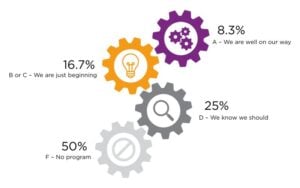
Figure 1. The real risk of electrical system failure is not known to many reliability leaders.
As illustrated in Figure 1, the real risk of electrical system failure remains unknown to many reliability leaders — a gap that persists even in organizations with otherwise mature asset management programs. The first step toward closing that gap is quantifying what is actually at risk by categorizing equipment by criticality so that maintenance investment is proportional to failure impact.
Categorizing Assets by Criticality
Non-Critical and Auxiliary Transformers
Non-critical transformers can be run-to-failure. Failure creates an unplanned expense and operational inconvenience, but there is no significant downstream impact on the broader operation. Routine condition testing is sufficient to maintain situational awareness and allow for planned replacement.
Auxiliary transformers support operations that are important but not production-defining. An unexpected failure would not halt a line or shutter a facility. These assets require regular testing and data interpretation, periodic field inspection, and baseline transformer management training. Reactive maintenance is acceptable at this tier.
System-Critical and Mission-Critical Transformers
System-critical transformers power production lines, hospital wards, and other environments where power loss carries both revenue and safety consequences. Predictive maintenance is required, supported by single-gas real-time monitoring to detect incipient faults and enable immediate response.
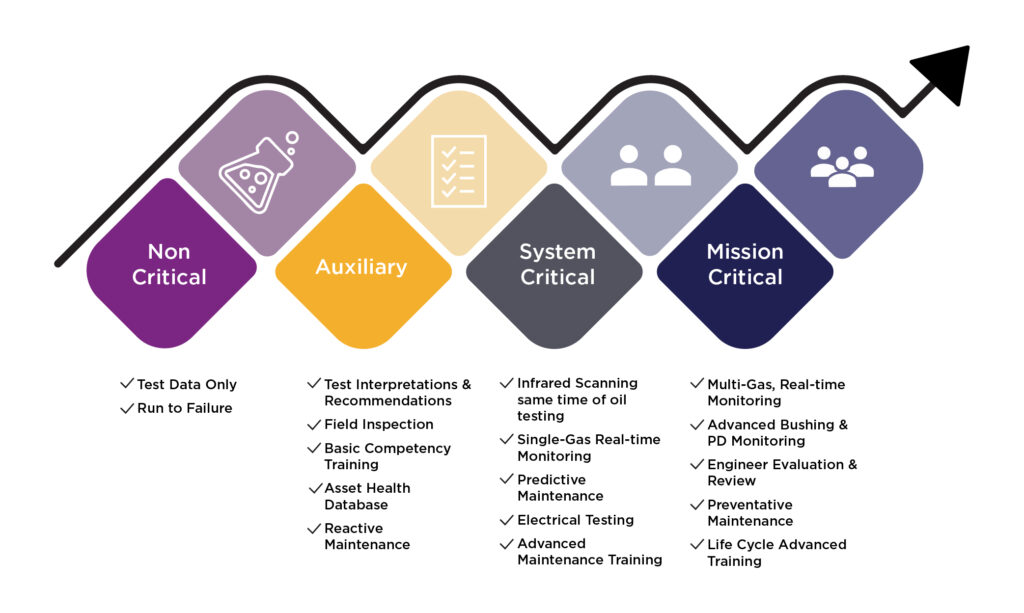
Figure 2. Best practice for transformer reliability.
Mission-critical transformers are those whose failure would be catastrophic to overall facility operation. These require the full spectrum of maintenance practice: regular testing, field inspection, electrical testing, advanced bushing and partial discharge monitoring, engineer-level evaluation, and multi-gas real-time monitoring. Maintenance staff at this tier should be trained across the full equipment lifecycle, from installation through decommissioning. Figure 2 outlines best practice for transformer reliability across all four criticality tiers.
Organizational Barriers
As shown in Figure 3, a broad range of stakeholders — spanning procurement, purchasing, IT, risk management, plant management, and the C-suite — can either enable or impede the development of electrical system reliability. The sections below address the three areas where barriers most commonly arise.
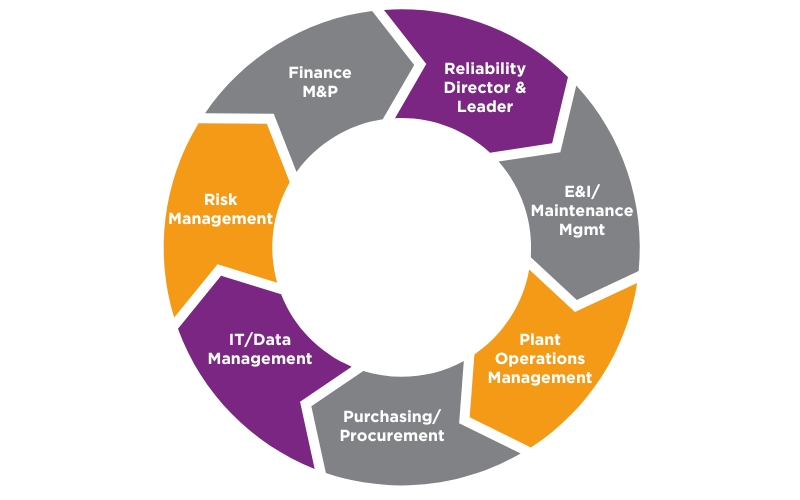
Figure 3. Organizational barriers to overcome to develop electric power system reliability.
Procurement vs. Purchasing
A recurring structural barrier is the misalignment between purchasing and procurement functions. Purchasing is typically optimized for lowest unit cost. Procurement, by contrast, is focused on acquiring the best solution for a defined problem — and that distinction matters significantly when scoping a multi-year reliability program.
Engaging procurement early and including purchasing in the same conversation allows both functions to shape the approach together. A program requiring $1.2 million in year one may be rejected outright; the same program restructured at $300,000–$400,000 annually over three to four years typically proceeds without issue. Both teams should be at the table from the beginning.
Information Technology
Any conversation about monitoring immediately creates an interface with IT, specifically around cybersecurity. The instinct for cautious IT professionals is to restrict rather than enable. That instinct is not unreasonable, but it is manageable. Monitoring is being implemented securely across industrial environments at scale — the question is not whether it can be done, but how. IT must be brought in at the start of the project, not presented with a completed plan. Involvement from the outset converts a potential obstacle into a project stakeholder.
Risk Management
Risk management professionals — whether internal or external — are a strategic asset when building the case for culture change. They can translate the technical and operational risk of electrical system failure into financial and liability terms that resonate at the executive level. Involving risk management early strengthens the program’s credibility and gives C-suite stakeholders an independent basis for prioritizing investment.
Cultural and Mindset Barriers
Resistance to Change (TTWWHADI)
The most persistent barrier is often not organizational — it is attitudinal. Experienced maintenance teams running high-performing operations have strong reasons to trust their existing processes. “That’s The Way We Have Always Done It” (TTWWHADI) is not stubbornness; it is confidence built on demonstrated results. Overcoming it requires acknowledging that the current approach has worked — while making a clear case that electric power system reliability represents an extension of that success, not a repudiation of it.
Fear of Job Displacement
When new monitoring and data management technologies are introduced, plant-level staff often anticipate workforce reduction. That concern should be addressed directly and early. Reliability programs are not designed to replace expertise — they are designed to leverage it. The interpretive and decision-making judgment that experienced maintenance professionals bring cannot be automated. Technology extends their capacity; it does not replace it.
Loss of Plant-Level Control
Plant managers own their profit and loss, and corporate-driven reliability initiatives can be perceived as an encroachment on that ownership. This resistance is best addressed by demonstrating alignment: a reliable electric power system directly supports the plant manager’s ability to sustain peak operational efficiency and protect margin. The program should be framed as enabling plant-level performance, not overriding it. Siloed decision-making at any level undermines the program; collaborative involvement across hierarchy is essential.
“Flavor of the Month” Skepticism
Significant process changes are frequently — and often accurately — perceived as temporary corporate priorities. If electrical system reliability is introduced without clear organizational commitment, defined ownership, and visible executive sponsorship, it will be treated as a passing initiative. Sustained buy-in requires that the program be positioned not as a project, but as a culture change, with visible participation from every level of the organization.
Structural and Planning Barriers
Unclear Expectations
Ambiguity about roles, ownership, and accountability is a predictable consequence of siloed organizational structures. Before implementation begins, the following must be clearly defined and communicated across the organization: who owns each asset class, what the current condition baseline is, who is committed to supporting the program and in what capacity, what the meeting and reporting cadence will be, and who holds accountability at each stage. A cross-functional team with representation from all relevant departments is not optional — it is the mechanism through which expectations are set and maintained.
Unrealistic Timelines
Electrical infrastructure that has degraded over decades cannot be brought to reliability standards in a matter of months. Programs that attempt to compress timelines typically do so at the expense of criticality-based prioritization — treating all assets equally rather than directing resources where failure risk is highest.
Effective timelines are built around lifecycle management. From procurement through monitoring, inspection, maintenance, and repair, a well-structured multi-year program is substantially more cost-effective than repeated cycles of emergency capital expenditure. SDMyers has developed health standards for transformers, and analogous standards exist for cables, relays, and breakers. These standards provide the foundation for multi-year budget planning with defined milestones, 3-to-5-year capital budgets, and ROI-based justification for sustained maintenance investment.
Summary:
- Electrical systems are systematically excluded from reliability programs that cover every other critical asset class — creating disproportionate financial exposure relative to asset replacement cost alone.
- Criticality classification (non-critical, auxiliary, system-critical, mission-critical) is the foundational step in any electrical reliability program, enabling resource allocation proportional to failure impact.
- Procurement and purchasing must both be engaged early; structuring investment as annualized expenditure over 3–4 years rather than a single capital ask significantly improves approval outcomes.
- IT and risk management are allies, not obstacles — when engaged at the start, both functions strengthen the program’s technical security posture and executive-level credibility.
- TTWWHADI, job displacement fears, and loss-of-control concerns are predictable responses to change; each requires direct, early communication grounded in operational and financial alignment.
- “Flavor of the month” skepticism is best countered by positioning the program as organization-wide culture change, with defined ownership, cross-functional representation, and visible executive commitment.
- Clear role definitions and cross-departmental accountability structures are prerequisites — not byproducts — of a successful implementation.
- Timelines must reflect the complexity of the infrastructure being addressed; multi-year budget commitments with lifecycle-based planning yield better ROI than repeated emergency capital cycles.