


What Is Arc Flash Safety Protocol for Cabinet Transformers?
- Knowledge Center
- Articles
- Safety Protocols
- What Is Arc Flash Safety Protocol for Cabinet Transformers?
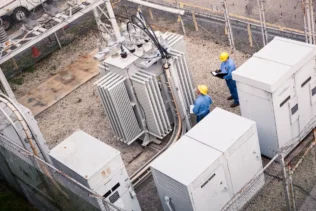
This article covers the physical nature of arc flash events, the regulatory framework established by NFPA 70E, and the three NFPA-recognized mitigation strategies for safely accessing energized cabinet transformers during liquid sampling and field inspection.
Arc flash is one of the most severe hazards in high-voltage electrical work — and one of the most preventable when the correct protocols are in place. For service technicians performing liquid sampling and inspection on cabinet transformers, the stakes are especially high: routine access to energized equipment, if improperly managed, can trigger an arc flash event with catastrophic consequences. Since 2018, revisions to NFPA 70E have tightened the requirements governing exactly how and when technicians may safely approach energized electrical equipment. Understanding the standard — and the hierarchy of controls it prescribes — is foundational to safe transformer field service.
What Is an Arc Flash Event?
An arc flash is an uncontrolled energy release caused by an electrical fault — typically a phase-to-phase or phase-to-ground fault — in which ionized air becomes conductive and sustains a high-current arc between conductors or between a conductor and ground. The event can be triggered by equipment failure, contamination, accidental contact, or insulation breakdown.
Despite often lasting only a fraction of a second, the energy release is extreme:
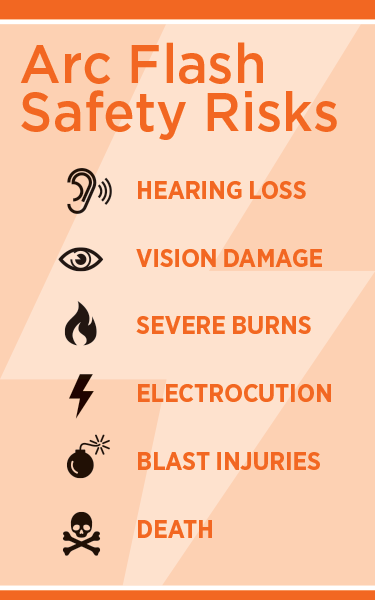
- Temperature: Arc flash plasma can reach approximately 30,000°F — roughly four times the surface temperature of the sun — causing immediate ignition of combustible materials and severe thermal burns.
- Pressure wave: The rapid vaporization of metal and expansion of gases generates a pressure blast capable of shattering glass, splintering structural materials, and causing blunt-force trauma.
- Molten metal ejection: Vaporized and liquefied conductor material can be expelled at velocities approaching 700 MPH, presenting a penetration and burn hazard well beyond the immediate arc boundary.
- Acoustic and optical hazards: The event generates intense sound pressure and ultraviolet/infrared radiation that can cause permanent hearing and vision damage.
Arc flash incident energy — typically measured in calories per square centimeter (cal/cm²) — is the primary metric used to quantify exposure severity and determine appropriate PPE requirements. Incident energy is a function of fault current magnitude, system voltage, arc duration, and working distance.
NFPA 70E: Regulatory Framework
Scope and OSHA Enforcement
NFPA 70E, Standard for Electrical Safety in the Workplace, is published by the National Fire Protection Association and establishes the minimum safety requirements for work on or near energized electrical equipment.1 While the standard itself is a consensus document, it is referenced by OSHA under the General Duty Clause (Section 5(a)(1) of the OSH Act) and specific OSHA electrical standards (29 CFR 1910 Subpart S and 29 CFR 1926 Subpart K), giving it effective regulatory force for most industrial and commercial facilities.234
Key Revisions Since 2018
The 2018 edition of NFPA 70E introduced significant updates that directly affect transformer field service protocols, including:
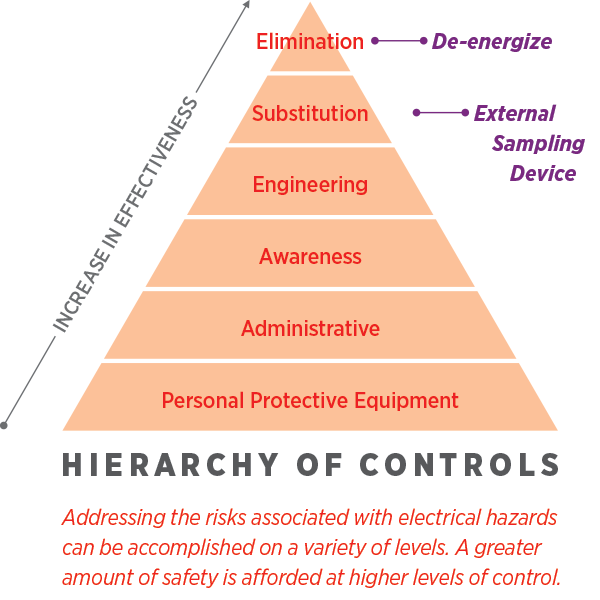
- Expanded hierarchy of risk controls: The standard more explicitly adopts the traditional industrial hygiene hierarchy of controls — elimination, substitution, engineering controls, administrative controls, and PPE — as the governing framework for arc flash mitigation.
- Revised PPE categories and arc rating requirements: The arc flash PPE categories were restructured, with updated incident energy thresholds and required arc ratings for each category level.
- Energized Electrical Work Permit requirements: The standard formalized when and how an Energized Electrical Work Permit (EEWP) must be completed before performing justified energized work, including explicit documentation of why de-energization is infeasible.
- Tightened restricted approach boundaries: Approach boundary distances for shock and arc flash hazards were revised to reflect updated fault current and incident energy data.
For organizations servicing cabinet transformers, these revisions directly govern the conditions under which liquid sampling and inspection may be performed on energized equipment.
Arc Flash Risk to Facilities and Operations
Beyond the immediate threat to personnel, an arc flash event can produce substantial collateral damage to a facility and its operations:
- Equipment destruction: Extreme heat and molten metal ejection can render switchgear, transformers, and associated electrical infrastructure irreparable, requiring full replacement of high-capital assets.
- Facility fire: Arc flash events are a leading ignition source for electrical fires. In transformer applications, the presence of insulating oil or other dielectric fluids significantly amplifies the fire and explosion risk.
- Blast damage: Overpressure from the arc plasma expansion can cause structural damage — including shattered enclosures, damaged walls, and destroyed adjacent equipment — well beyond the immediate arc boundary.
- Unplanned downtime: Arc flash incidents typically force extended, unplanned outages while equipment is assessed, replaced, and the site is deemed safe. This carries significant operational and financial cost, particularly in industrial and utility environments.
- Regulatory and liability exposure: An arc flash event that results in injury or fatality triggers OSHA investigation and may result in citations, fines, and litigation.
Three NFPA 70E-Recognized Mitigation Strategies
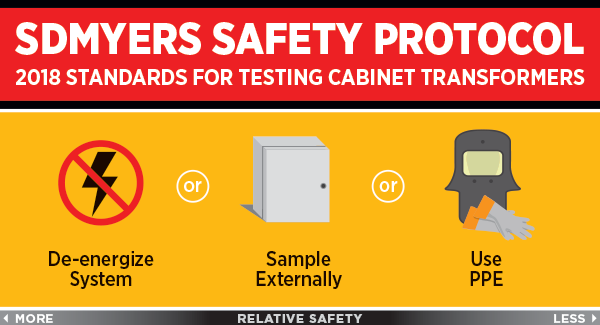
NFPA 70E establishes a hierarchy of risk controls that service organizations must follow when determining how to approach energized equipment. For cabinet transformer liquid sampling and inspection, three primary strategies apply. The selection of the appropriate approach depends on transformer type, system voltage, available fault current, and operational constraints.
Option 1: De-Energize the System
De-energizing the cabinet transformer before performing liquid sampling or inspection eliminates the arc flash hazard entirely and represents the highest level of protection in the hierarchy of controls. Under NFPA 70E, this is the preferred approach when operationally feasible.
De-energization involves:
- Implementing a formal Lockout/Tagout (LOTO) procedure per OSHA 29 CFR 1910.1475
- Verifying absence of voltage using properly rated test equipment
- Establishing an electrically safe work condition before any contact with previously energized parts
The practical tradeoff is planned downtime and the costs associated with de-energization and re-energization sequences — including potential inrush current concerns and load transfer requirements. For facilities that cannot tolerate outages, this option may not be operationally viable, which drives evaluation of the remaining strategies.
Option 2: External Sampling Devices
Where de-energization is not feasible, an engineering control approach can eliminate the need for direct access to the energized interior of the transformer cabinet. External sampling devices — such as permanently mounted sampling ports or remote sampling systems — allow technicians to collect dielectric fluid samples and perform visual inspections (fluid level, oil temperature, leak assessment) without opening the transformer enclosure or breaching the arc flash boundary.
This approach aligns with the engineering control tier of the hierarchy of controls and is generally preferred over PPE-only approaches because it removes the technician from the arc flash hazard zone entirely, rather than simply mitigating exposure. The device must be properly installed, rated for the system voltage, and maintained in accordance with manufacturer specifications to ensure sample integrity and personnel safety.
Option 3: PPE with an Energized Electrical Work Permit
When neither de-energization nor external sampling is practicable, NFPA 70E permits energized work provided that an Energized Electrical Work Permit (EEWP) is completed and authorized prior to beginning the task. The permit must document:
- A specific justification for why energized work is necessary (i.e., why de-energization is infeasible or would introduce greater hazards)
- A description of the work to be performed
- Identification of the arc flash and shock hazard boundaries
- The incident energy level at the working distance, or the applicable PPE category
- Required PPE arc ratings and equipment
- Identification of responsible personnel
PPE is explicitly identified in NFPA 70E’s hierarchy of controls as the least effective mitigation measure — it does not reduce the likelihood of an arc flash event, only the severity of injury if one occurs. PPE must be rated to meet or exceed the calculated incident energy at the working distance. Underrated PPE can fail catastrophically during an arc flash, providing no meaningful protection.
Choosing the Right Approach
No single mitigation strategy is universally applicable. The appropriate control measure depends on a facility-specific assessment that includes:
- Transformer type and configuration: Pad-mounted, pole-mounted, and network transformers present different access points, enclosure designs, and arc flash boundary geometries.
- System voltage and available fault current: Higher available fault current at the transformer terminals increases incident energy and narrows the range of viable energized-work options.
- Operational requirements: Facilities with continuous process requirements or critical infrastructure loads may have genuine constraints on de-energization that justify engineering control or PPE-based approaches.
- Arc flash hazard analysis currency: NFPA 70E requires that arc flash hazard analyses be reviewed when changes to the electrical system occur and at intervals not to exceed five years. Outdated studies may no longer reflect actual system conditions.
A qualified electrical safety professional should conduct or review the hazard analysis and mitigation strategy selection before any liquid sampling or field inspection is performed on energized cabinet transformers.
Summary:
- Arc flash is an uncontrolled electrical fault event that releases extreme thermal, pressure, and kinetic energy — reaching temperatures up to 30,000°F — in a fraction of a second, posing potentially fatal risks to service personnel.
- NFPA 70E governs arc flash safety for energized electrical work and is enforced by OSHA; revisions since 2018 have strengthened requirements for PPE selection, energized work justification, and the application of the hierarchy of controls.
- Incident energy (cal/cm²) is the key metric for quantifying arc flash exposure and determining required PPE arc ratings at a given working distance.
- Three NFPA 70E-recognized mitigation strategies apply to cabinet transformer service: de-energization (highest protection), external sampling devices (engineering control), and PPE with an Energized Electrical Work Permit (least effective, last resort).
- De-energization eliminates the hazard entirely but requires LOTO compliance and carries operational downtime costs.
- External sampling devices remove technicians from the arc flash hazard zone without requiring de-energization, making them a preferred engineering control for facilities with continuous uptime requirements.
- PPE alone does not prevent arc flash — it only reduces injury severity; its use must always be accompanied by a completed and authorized Energized Electrical Work Permit that justifies energized work.
- Mitigation strategy selection must be based on a facility-specific arc flash hazard analysis that accounts for transformer type, system voltage, available fault current, and operational constraints — and reviewed at least every five years per NFPA 70E.
References:
1 National Fire Protection Association. (2018). NFPA 70E: Standard for electrical safety in the workplace (2018 ed.). Quincy, MA: Author.
2 Occupational Safety and Health Administration. (1970). Occupational Safety and Health Act of 1970 (Pub. L. 91-596). Section 5(a)(1), 29 U.S.C. § 654(a)(1). U.S. Department of Labor. osha.gov
3 Occupational Safety and Health Administration. (1970). Electrical (29 CFR 1910 Subpart S). U.S. Department of Labor. https://www.osha.gov/laws-regs/regulations/standardnumber/1910/1910SubpartS
4 Occupational Safety and Health Administration. (1986). Electrical (29 CFR Part 1926 Subpart K). U.S. Department of Labor. https://www.osha.gov/laws-regs/regulations/standardnumber/1926/1926SubpartK
5 Occupational Safety and Health Administration. (1989). The control of hazardous energy (lockout/tagout) (Code of Federal Regulations, Title 29, Part 1910.147). U.S. Department of Labor. https://www.osha.gov/laws-regs/regulations/standardnumber/1910/1910.147