


What Every Reliability Engineer Should Know About Transformer Failure
- Knowledge Center
- Articles
- Transformer Reliability
- What Every Reliability Engineer Should Know About Transformer Failure
This article addresses the eight foundational truths that define effective transformer reliability programs — covering asset criticality, oil diagnostics, thermal and environmental stressors, condition-based monitoring, loading impacts, and fleet-level risk management.
Transformer failures are not purely electrical events — they are reliability failures, business disruptions, and, in many cases, reputational crises. For power system reliability engineers, maintenance planners, asset managers, and testing contractors, the challenge is not access to data. It is translating that data into resilience.
As power demand grows and infrastructure ages, transformer reliability has become a core operational priority across utilities, industrial operators, and mission-critical facilities. Yet many programs still fall short — collecting diagnostics without structured interpretation, monitoring assets without defined response protocols, or applying uniform maintenance strategies to assets with vastly different criticality profiles.
The eight truths outlined here provide a practical framework for closing that gap. They are grounded in the MaxLife® Philosophy developed by SDMyers — a reliability approach built on more than six decades of transformer maintenance, oil analysis, and lifecycle data. The central principle is straightforward but consequential: the life of the transformer is the life of the paper. When operators understand how heat, moisture, oxygen, and loading interact to degrade cellulose insulation, they can extend reliable transformer service life well beyond conventional industry expectations.
Key Questions Before You Begin
Before examining each truth, it is worth framing the questions that define what is at stake — questions around criticality, environmental stressors, program structure, and fleet-level performance.
- Why does asset criticality outweigh asset age in maintenance planning? Not all transformers carry equal operational risk. An older unit in a non-critical location may present less exposure than a newer transformer feeding a mission-critical process. Prioritizing by criticality ensures limited maintenance resources are directed toward assets whose failure would cause the greatest disruption.
- What is the risk of monitoring without a defined action plan? Monitoring without structured response converts valuable diagnostic data into noise. When teams collect results but lack defined thresholds, escalation protocols, or authority to act, preventable failures follow.
- How do moisture and oxygen degrade transformer reliability? Both accelerate insulation breakdown and oil oxidation. In free-breathing or poorly sealed units, their presence can silently reduce dielectric strength long before external indicators appear.
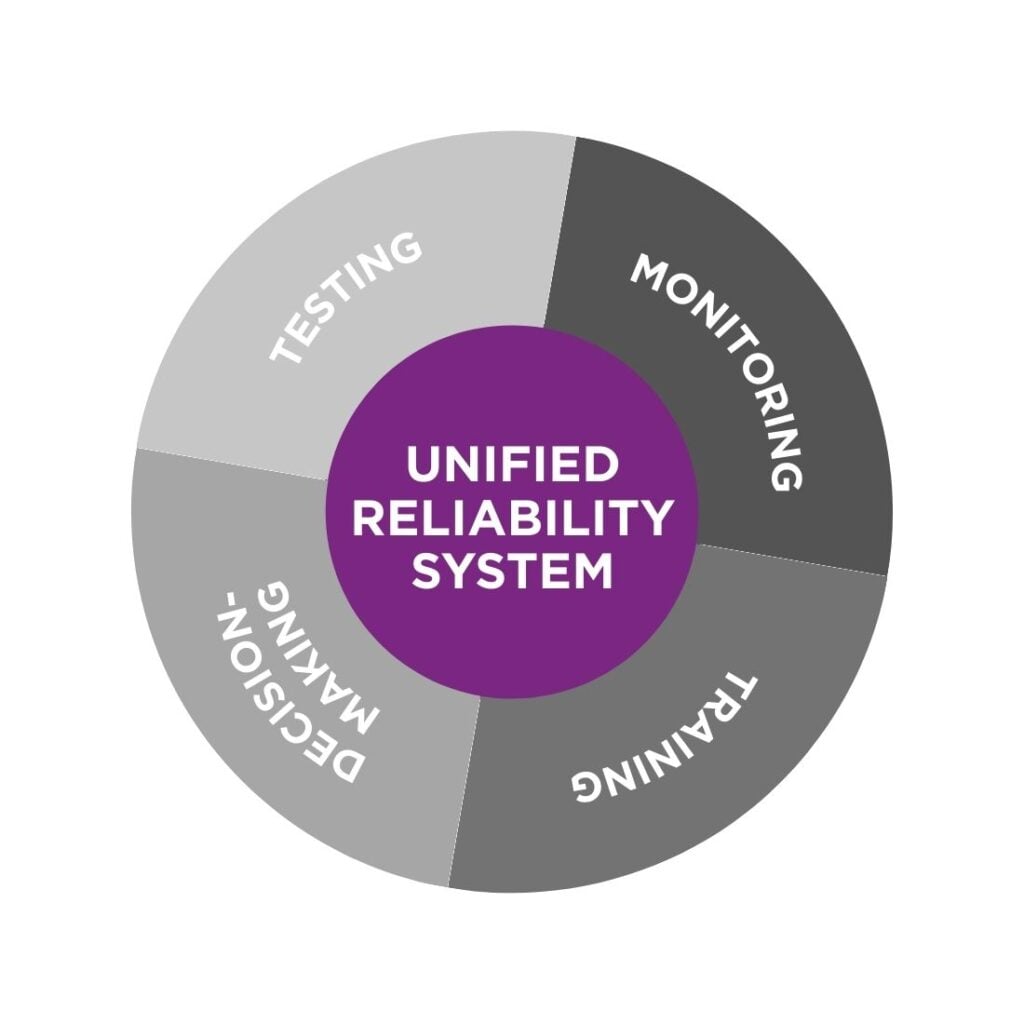
- What does it mean that reliability is a system, not a test? No single diagnostic guarantees transformer health. True reliability is the outcome of an integrated system — diagnostics, monitoring, training, asset history, protocols, and decision-making working in coordination.
- How can fleet-level data improve individual asset decisions? Evaluating transformers as a collective fleet — using condition, criticality, and performance data — allows organizations to identify weak links, optimize testing cadence, prioritize capital replacement, and avoid both over-maintaining healthy units and missing at-risk ones.
The Eight Truths
Truth 1: Asset Criticality Must Shape Strategy
A one-size-fits-all maintenance approach overlooks one of the most important dimensions of transformer reliability: the consequence of failure. High-priority assets require higher scrutiny and more proactive testing protocols. An effective reliability program begins by categorizing transformers not only by size or age, but by what failure would actually cost — operationally, financially, and in terms of safety.
True asset criticality integrates consequence-of-failure assessment with real-time condition data. Fleet reliability programs that benchmark assets across condition, loading, design, and operational importance enable better prioritization of monitoring, maintenance resources, and capital investments. Without this lens, programs risk misallocating both attention and budget.
Truth 2: Oil Analysis Is a Diagnostic Window
Transformer oil serves as more than an insulating medium — it is a continuous record of what is happening inside the unit. Dissolved gas analysis (DGA), dielectric strength, interfacial tension, and furan testing provide insight into thermal stress, arcing, overheating, insulation breakdown, and moisture intrusion. But raw results without interpretation provide limited value.
Effective reliability programs rely on a consistent testing portfolio — typically including DGA, Karl Fischer moisture analysis, interfacial tension, neutralization number, liquid power factor, and furan testing — interpreted in context: transformer design, operating stress, and longitudinal trends. Trend analysis over time is what separates meaningful diagnostics from data collection.
Truth 3: Thermal Stress Is the Primary Aging Mechanism
Every 10°C rise above design temperature can reduce insulation life by approximately half. Elevated temperatures accelerate cellulose aging and hasten dissolved gas accumulation. Load tap changers, restricted airflow, harmonic loading, and excessive ambient heat all compound this risk.
Managing hot-spot temperature through load control, cooling system maintenance, and LTC health monitoring is one of the most effective interventions available for preserving transformer service life. Thermal aging is not an abstract concern — it is a measurable, manageable variable in any serious reliability program.
Truth 4: Moisture and Oxygen Degrade from Within
Moisture reduces dielectric strength and accelerates paper insulation breakdown. Oxygen catalyzes oil oxidation and sludge formation. Together, they represent the most persistent internal threats to transformer longevity — and both can operate invisibly for extended periods before degradation becomes apparent.
Reliability-focused programs adopt a moisture-aware posture that goes beyond detection to active mitigation. Proven strategies include in-service moisture reduction, breather and conservator maintenance, nitrogen blanketing where applicable, and proactive gasket and seal management. Transformers maintained in a dry, oxygen-controlled environment age more slowly and operate with higher safety margins.
Truth 5: Monitoring Without Response Is Not a Program
Digital sensors and online monitoring platforms are increasingly prevalent — but data without action provides false reassurance. Many failures occur in systems where early warning indicators were present but went unread, uninvestigated, or deprioritized.
Condition-based maintenance is only effective when alerts are tied to predefined responses. Effective programs establish trigger levels, validation procedures, escalation paths, and corrective options — ensuring that monitoring leads to meaningful intervention. The gap between detection and action is where reliability is lost.
Truth 6: Loading History Reveals Hidden Risk
Two transformers installed in the same year may be aging at substantially different rates depending on how they have been operated. Thermal cycling, frequent tap changes, and harmonic loading each impose mechanical and electrical stress that accelerates degradation independent of calendar age.
Monitoring loading history and tap position data enables identification of high-stress units that may warrant more frequent diagnostics. Understanding operational workload — not just nameplate age — is essential to surfacing hidden high-risk assets before reliability is compromised.
Truth 7: Reliability Is Systemic, Not Diagnostic
No single test guarantees transformer health. It is the system — the people, training, procedures, documentation, and follow-through — that builds long-term resilience. Transformer reliability must be embedded in operational culture, with clearly defined roles and repeatable processes.
Programs aligned with modern reliability standards emphasize standardized procedures, accountability structures, and ongoing training — transforming reliability from a reactive effort into a sustainable operational discipline. The difference between a program and a practice is execution consistency.
Truth 8: Fleet Strength Depends on the Weakest Unit
Transformers fail collectively in the sense that a single high-risk unit can interrupt operations and create disproportionate exposure across a facility or network. Fleet-level reliability requires benchmarking all assets across condition, criticality, age, and risk — enabling smarter capital planning and life-extension prioritization.
Without a fleet-wide perspective, organizations frequently over-maintain healthy units while missing early warning signals on assets that are genuinely at risk. Fleet reliability programs unlock operational transparency, budget clarity, and a measurable return on reliability investment.
Summary:
These eight truths provide a framework for identifying vulnerabilities, structuring maintenance programs, and extending transformer service life across diverse industries and operating environments. The key principles to carry forward:
- Criticality drives prioritization. Asset age alone is an insufficient basis for maintenance planning. Consequence of failure must anchor your strategy.
- Oil analysis requires interpretation. A consistent diagnostic portfolio — DGA, Karl Fischer, interfacial tension, furans, and more — is only valuable when evaluated in context and over time.
- Thermal management is non-negotiable. The 10°C rule is not theoretical. Hot-spot temperature control is one of the highest-leverage interventions available.
- Moisture and oxygen require active mitigation. Detection alone is insufficient. Programs must include validated strategies to reduce and control both.
- Monitoring without action is noise. Defined trigger levels, escalation protocols, and corrective pathways are what make condition-based maintenance functional.
- Loading history surfaces hidden risk. Operational stress — not calendar age — determines how quickly an asset degrades.
- Reliability is systemic. People, training, procedures, documentation, and accountability are the infrastructure of a reliable program.
- Fleet-level visibility is essential. Managing transformers as a collective fleet prevents misallocation of resources and missed risk signals.
Organizations that apply these principles through structured maintenance programs, actionable monitoring, and fleet-level planning position themselves for fewer failures, extended asset life, and a more resilient power system.
Partner With SDMyers
Reliability doesn’t happen overnight. SDMyers is the expert in end-to-end transformer care, backed by 60+ years of testing, monitoring, and training experience. Partnering with SDMyers means more uptime, informed decision-making, and increased peace of mind.